Optimas vacuum tube lifters

Move the material.
Free up your crew.

Large slabs, curbing, and heavy stone do not always need a second person at the point of placement. A tube lifter lets one operator handle the lift and position the material while another crew member can keep the rest of the job moving.

The right setup depends on the material, suction pad, site access, and machine.

Phil using a Vacu-Mobile Allrounder to position a large slab
One operator at the lift. More room for the rest of the crew to work.

The jobsite problem

Two people tied up on every pick adds up.

One person runs the machine. Another guides each heavy piece into place. That second set of hands may be needed for some lifts, but it can also become the bottleneck on jobs where one operator could place the material with the right equipment.

Vacuum tube lifting takes much of the manual load off the person handling slabs or curb and gives them control near the point of placement. That can make larger material more practical for a small crew and reduce the bending and wrestling that wear people down over a long day.

Put a crew member elsewhere

Stage material, prep the next area, or handle another task while the lifter operator places.

Handle heavier products

Choose a setup for large slabs, natural stone, pavers, curbing, or wall material.

Place with control

Guide the piece into position instead of carrying and lowering it by hand.

Take strain off the crew

Machine assisted lifting reduces repeated manual handling of heavy material.

See the equipment work

Watch the lift. Picture your crew.

See how a tube lifter handles material on the job, then run your own numbers below. Site layout and material handling will determine where it helps your operation most.

Labor calculator

What could one freed up crew member mean to your business?

Enter the hours you expect to use a tube lifter. This estimates the labor capacity you could redirect if one operator handles placement that currently takes two people.

Your estimate

700crew hours per year available for other work
$28,000annual labor capacity value at your rate

This is the value of time you could redirect, not automatic cash savings or added revenue. It assumes one person can operate independently for every hour entered and that the second person can do productive work elsewhere. Material, pad, access, and staging can change the result. Machine cost is not included, so this is not a payback calculation.

Talk through your numbers

Choose your setup

Four ways to put vacuum lifting to work.

Start with how your jobs are staged, what equipment you already have, and how tight the access is. We can help confirm the lifting pad and material fit before you commit.

Vacu-Mobile Allrounder on a hardscape jobsite
Self propelled, all around use

Vacu-Mobile Allrounder

Moves over difficult terrain on rubber tracks, transports pallets, and places concrete or natural stone. The folding boom helps in confined areas.

  • Up to 300 lb, depending on pad and material porosity
  • Hydraulic support feet; compact trailer transport
  • Listed dimensions: 99″ L × 37″ W × 99″ H
Ask about the Allrounder
Vacu-Lift H in use with stone material
Loader based lifting

Vacu-Lift H

A vacuum hose lifter for granite, bluestone, wet cast, and natural stone. Its folding boom and hydraulically balanced mast support precise positioning.

  • Up to 300 lb, depending on pad and material porosity
  • Hydraulic loader attachment available
  • Listed dimensions: 88″ L × 52″ W × 83″ H
Ask about the Vacu-Lift H
Vacu-Lift H Mini with lifting pad
Tight access

Vacu-Lift H Mini

A compact option for narrow entrances and hard to reach backyards. The vacuum box can be repositioned or removed for transport and narrow spaces.

  • Listed maximum lift: 310 lb; verify material and pad
  • 35″ wide without vacuum box; 41″ with box
  • Requires suitable auxiliary hydraulics: 6.6–26 GPM at 1,885–3,045 PSI
Ask about the H Mini
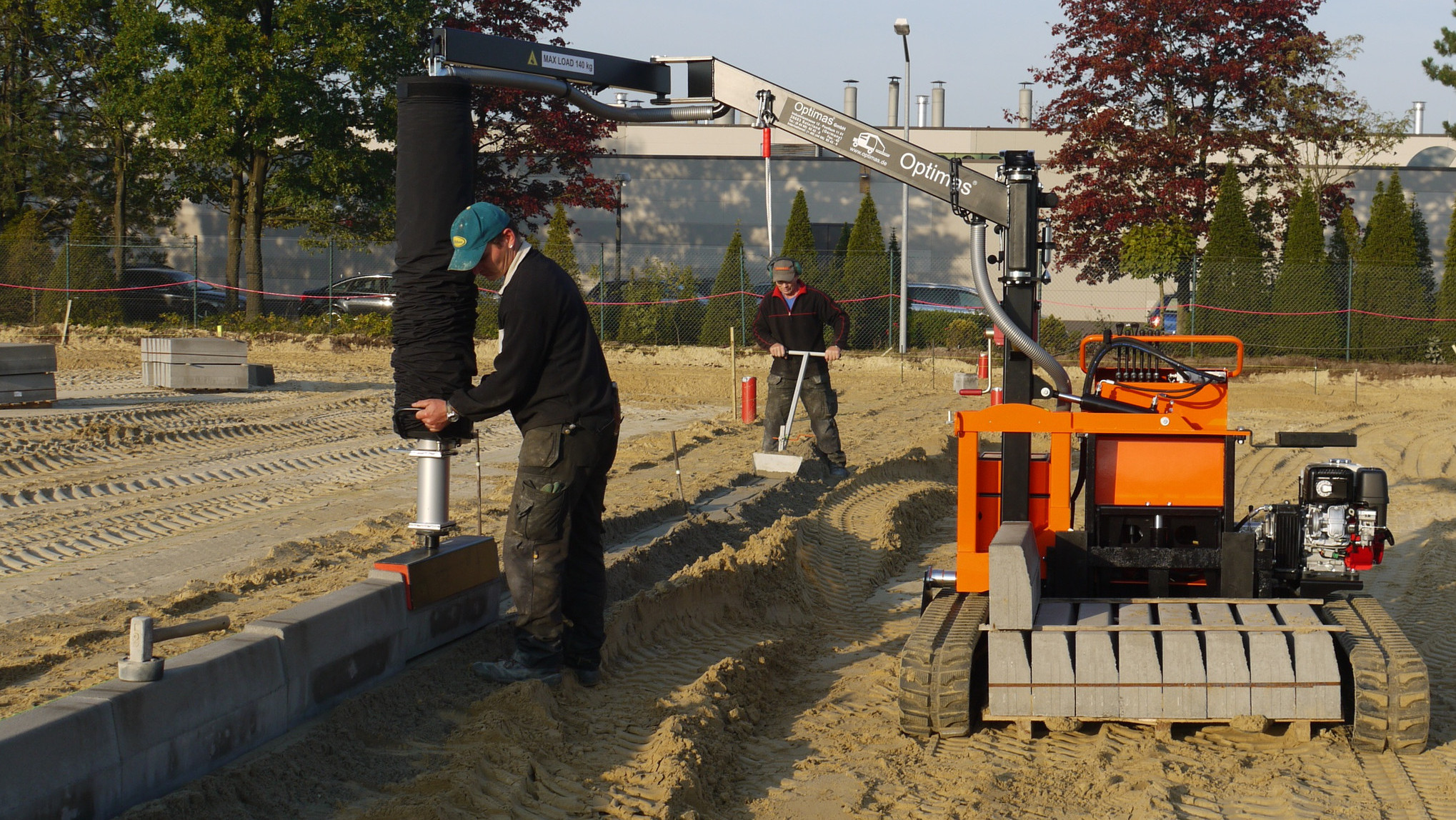
Optimas Vacu-Pallet Mobile lifting a curb stone on a jobsite
Transport and place

Vacu-Pallet Mobile

Transport material across the site and use the vacuum tube lifter to place curbstones, gutter stones, pavers, and slabs. Its compact format is designed for trailer transport.

  • Manufacturer lists petrol and diesel engine options
  • Can reduce the need for a separate wheel loader on some jobs
  • Pad and material compatibility confirmed on a call
Ask about the Vacu-Pallet
Not sure which one belongs on your jobs?Have us help you choose

Good questions to ask

Before you choose a machine.

Will a tube lifter work with my material?

Vacuum grip depends on material porosity, surface, weight, and the suction pad. Share the actual product and dimensions with us so we can recommend a suitable setup. A published maximum lift is not a promise for every material.

Will it really let one person place material?

That is the goal on suitable work, but job conditions matter. Access, staging, lift path, and safe operating practices may still call for additional help. The calculator lets you estimate only the hours where the second person could be reassigned.

Can I get pricing or financing details?

Yes. Tell us about your work and the model you are considering. We will follow up to discuss machine fit, current pricing, and available payment options.

Free equipment consultation

Find the right lifter for your jobs.

Tell us what you are moving, what equipment you already have, and where your crew loses time. We will help narrow the four options, talk through your numbers, and follow up to arrange a conversation.

  • Material, weight, and pad fit
  • Jobsite access and equipment requirements
  • Pricing and payment options

No calendar booking required. We will contact you after reviewing the details.

Tell us about your work

A few details help us make the conversation useful.

We will use these details to follow up about your equipment inquiry.

Put your crew hours to better use.Talk with us